Dirty or blocked beam
Dust, cobwebs, snow, tools and storage can interrupt the beam. Clear the opening and wipe both lenses with a soft dry cloth.
Sensor Adjustment $120–$180 + GST · Replacement $180 + GST · Price Confirmed First
32,000+
completed jobs since 2019
Company-wide
3,610+
five-star Google reviews
Company-wide
BBB
accredited business
Publicly verifiable
Written
price before work
Scope explained first
The short answer
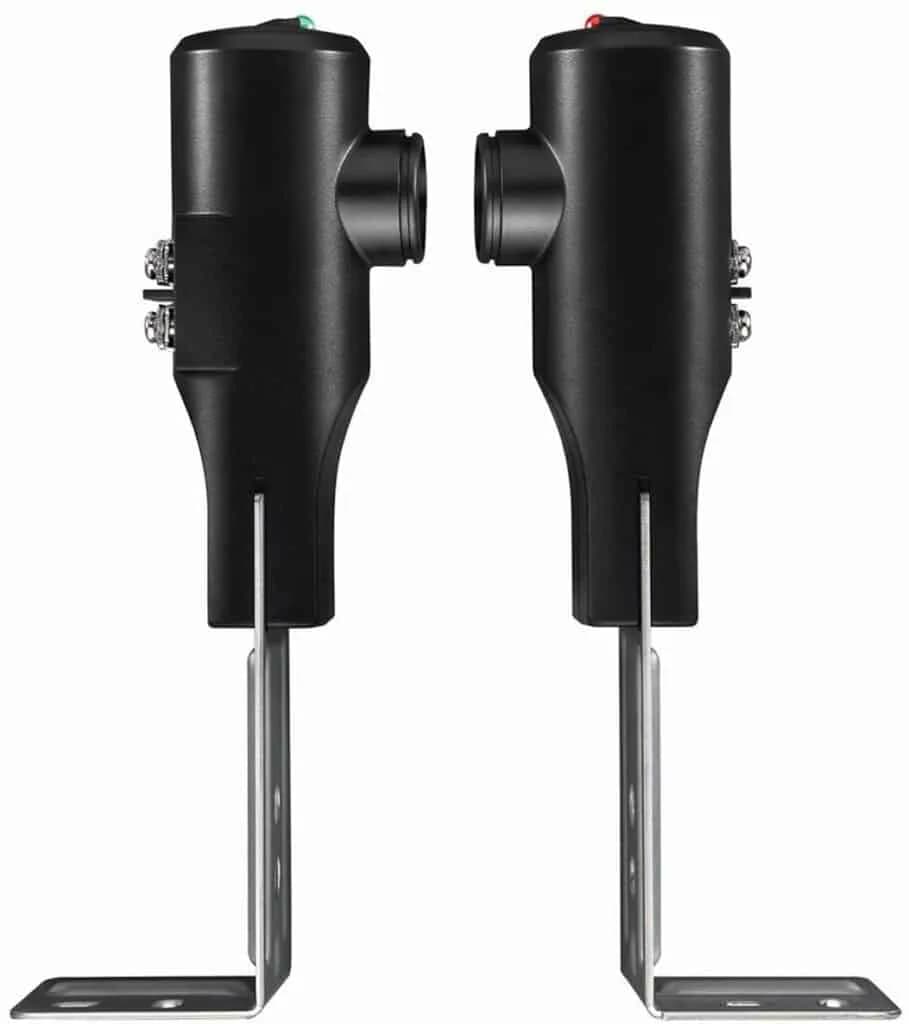
The photo eyes create a monitored beam near the floor. When the beam is blocked or the circuit is not satisfied, the opener should not close automatically. Dirty lenses, a bumped bracket, loose wire, direct sun or a failed matched pair can all create the same complaint.
Timing matters. A door that reverses before the floor may have a photo-eye fault. A door that reaches the floor and comes back up often has a travel, force or floor-contact problem. If the door binds by hand, correct that before increasing opener force.
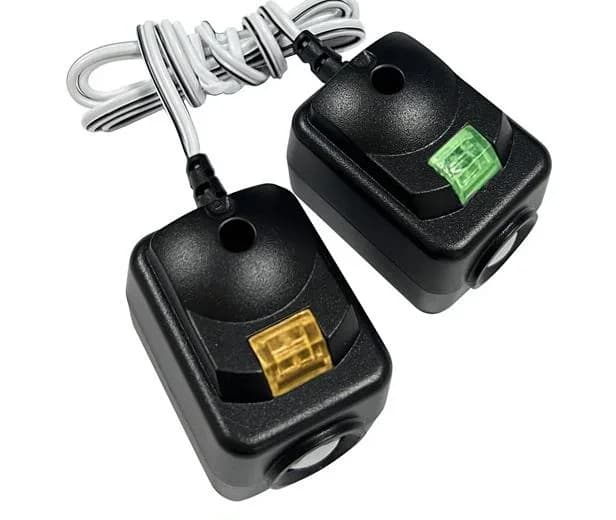
Constant-pressure closing from the wall control is an emergency method on many openers, not a repair. Keep the opening fully visible and clear, never stand under the door, and restore the monitored safety circuit before normal operation.
The indicator lights help, but the full operating pattern identifies the fault faster.
Dust, cobwebs, snow, tools and storage can interrupt the beam. Clear the opening and wipe both lenses with a soft dry cloth.
A foot, bicycle or shovel can move a bracket a few millimetres. An unstable bracket may work until the track vibrates.
Low-angle sun can overwhelm a receiver at a repeatable time of day. Correct aim and sensible shielding should be checked before parts are sold.
Staples, storage, rodents, corrosion and brittle insulation can open the circuit. Flickering when the wire moves is a useful clue.
A dead unit, moisture-damaged housing or incompatible replacement may leave the monitored circuit open even when the aim looks correct.
Floor contact, incorrect travel, force settings, binding tracks or opener logic can cause reversal while the photo-eye indicators appear normal.
Before calling
Clear people, pets, vehicles, snow and stored items from the opening and sensor path.
Wipe both lenses with a soft dry cloth. Do not use abrasives or flood the housings with cleaner.
Note whether either indicator is dark, blinking or changes when the bracket vibrates.
If failure happens at the same time of day, shade the receiver while someone operates the control from a safe position.
Inspect visible low-voltage wire for loose staples, pinches, breaks or corrosion. Do not open the motor housing.
Note whether the door reverses before the floor, after touching it, or closes only under constant wall-button pressure.
If the door is crooked, a cable is loose, a roller has left the track or the opener rail flexes, stop the test. That is not a sensor-only job.
The technician confirms the fault, repair and price before work begins.
$120–$180 + GST
Cleaning, aiming and adjustment when replacement parts are not required.
$180 + GST
Sensors, maintenance and inspection
$160 + GST
Installation of a compatible sensor pair supplied by the customer.
| Sensor service | Current price | What the row means |
|---|---|---|
| Sensors Adjustment | $120–$180 + GST | Cleaning, aiming and adjustment when replacement parts are not required. |
| Safety Sensors Replacement | $180 + GST | Sensors, maintenance and inspection |
| Install Customer's Sensors Only | $160 + GST | Installation of a compatible sensor pair supplied by the customer. |
Diagnosis before parts
Clear the path, clean lenses, read model-specific diagnostics and test whether the sensor aim stays put.
Inspect mounting, fasteners, visible wire, connections and continuity where appropriate.
Separate photo-eye behaviour from travel, force, floor contact, binding and logic faults.
After repair, verify normal closing and reversal response before returning it to service.

The right repair follows the fault instead of the most expensive part.
Best when lenses, aim or bracket position are the problem. Current adjustment: $120–$180 + GST.
Best when a loose connection or damaged low-voltage wire interrupts an otherwise compatible pair.
Best when electronics or housings have failed and compatible sensors are available. Current replacement: $180 + GST.
Best when indicators remain stable but the door still reverses, or logic, travel or force prevents safe monitoring.
Central Alberta conditions
Low winter sun reaches deeper into a garage than summer sun. If the receiver faces the bright opening, the problem may appear during one part of the day and disappear later. A sensor that stays pointed correctly and sensible shielding beat random part swapping.
Snow, salt residue and condensation collect near the floor. Wipe the lens, but also look for moisture inside the housing and brittle wire near staples or bends. A sensor that flickers when the track vibrates usually needs more than cleaning.
Cold may expose a marginal connection, but it does not prove the sensor pair is dead. The test should be repeatable before parts are ordered.
Sensor repair or opener replacement?
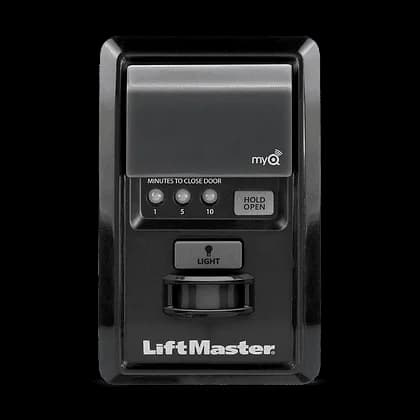
Repair a compatible sensor pair, stable wiring or a sensor that can be pointed correctly when the rest of the opener remains safe and serviceable. Replacement becomes reasonable when the opener cannot monitor a compatible safety circuit, essential parts are obsolete, the logic board is failing or several major faults are stacking up.
Compare the approved sensor repair with current installed-opener options instead of jumping from one blinking light to a new motor. See the Red Deer opener guide.
Who comes to the garage
Garage Door Fix sends employees rather than commission-based subcontractors. The technician explains the fault, confirms the repair, price and warranty terms, then tests closing and reversal after the work.
Written price and scope before work
Warranty written on the invoice
Photo-eye circuit tested after repair
Door resistance checked when symptoms overlap
Sensor symptoms overlap with opener setup, door resistance and weather-related problems.
Controls, limits, logic boards, rails and installed opener choices.
Read the guideBalance, travel, hardware and safety inspection.
Read the guideReduce snow, moisture and debris around the opening.
Read the guideCompare every published Red Deer repair and installation row.
Read the guideThe current Red Deer adjustment range is $120–$180 + GST. A company-supplied sensor replacement is $180 + GST. We check sensor aim, lenses, brackets, wiring, opener diagnostics and door travel before confirming which repair applies.
On many openers, constant pressure at the wired wall control is an emergency closing mode when the photo-eye circuit is not satisfied. It points toward blocked, misaligned, damaged or incompatible sensors, but it is not a permanent fix. Keep the opening fully visible and clear, then repair the safety system.
A blocked or unstable photo-eye beam is one possibility. If the door reverses only after touching the floor, the cause is more likely travel, force, floor contact or mechanical resistance. The timing helps separate the two problems.
Light colours and blink codes vary by opener brand and model. A blinking or unlit indicator usually means the monitored circuit is not satisfied, but the cause can be poor aim, obstruction, wiring, sunlight, power or a failed unit. Use the opener manual for the exact code.
Yes. Low-angle sunlight can overwhelm the receiving photo eye on some systems. A useful clue is a door that fails at the same time of day but works after the sun moves. Cleaning, secure aim, sensible shielding or repositioning may solve it without replacing the opener.
Yes. Snow or stored items can block the beam, while frost and condensation can scatter it at the lens. Clear the opening and wipe both lenses with a soft dry cloth. Moisture inside a housing or brittle winter wiring needs repair rather than repeated cleaning.
Some LED lamps and nearby electronics can interfere with opener controls or safety circuits. If the problem began after a bulb change, remove that bulb temporarily and test again. Use an opener-compatible lamp rather than assuming the sensors failed.
You can clear the path, clean the lenses and check whether a bracket is visibly loose. A gentle adjustment may restore a steady indicator, but do not permanently bypass, relocate or rewire the safety devices without the opener instructions.
Sensor assemblies are commonly supplied as a matched sender and receiver, so replacement is often done as a pair. A loose bracket, dirty lens or repairable wire may need no new sensor. Compatibility with the opener model should be confirmed first.
Yes, if they are compatible with the opener and required wiring. Installing a compatible sensor pair you supply is currently $160 + GST. Missing parts and damaged wiring are checked before the price is confirmed.
Replacement may make more sense when the opener cannot support a safe compatible sensor system, critical parts are obsolete, the logic board cannot monitor the circuit reliably or several major faults are stacking up. A healthy opener should not be replaced because a lens is dirty.
Coverage varies with an adjustment, wire repair, customer-supplied part or company-supplied sensor pair. We write the applicable parts-and-labour coverage on the quote or invoice before the job is complete.
Call (587) 847-0040 with the address. The office will confirm coverage, scheduling and any travel charge before you book.
Call (587) 847-0040. We check the simple causes before recommending sensors or a new opener.